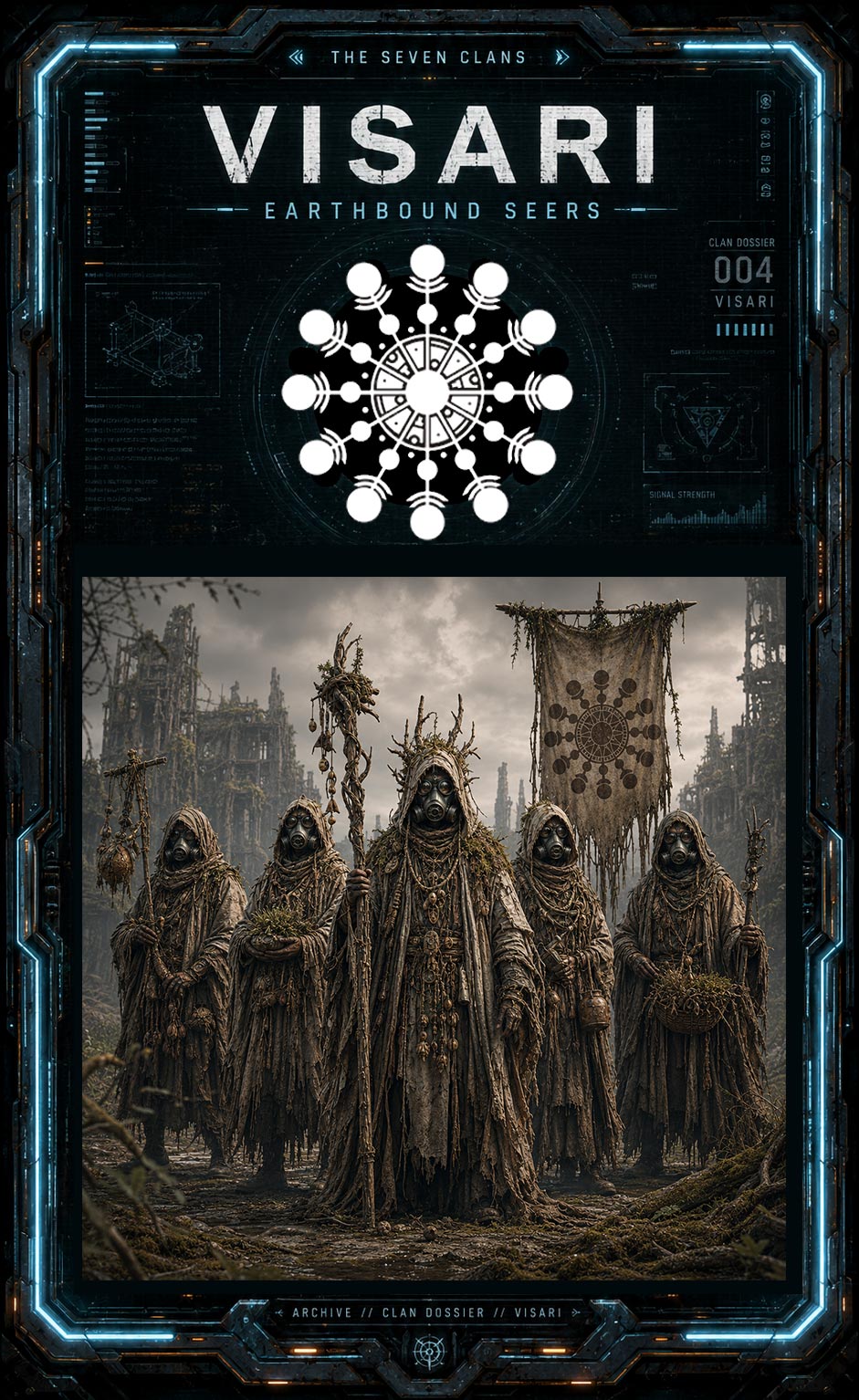
VISARI

Aliases:

Crazy Shamans, Green-Cultists, Dirt-Priests, Earthbound, Wild Seers

Origin:

Their name comes from an ancient word for vision.

Summary:

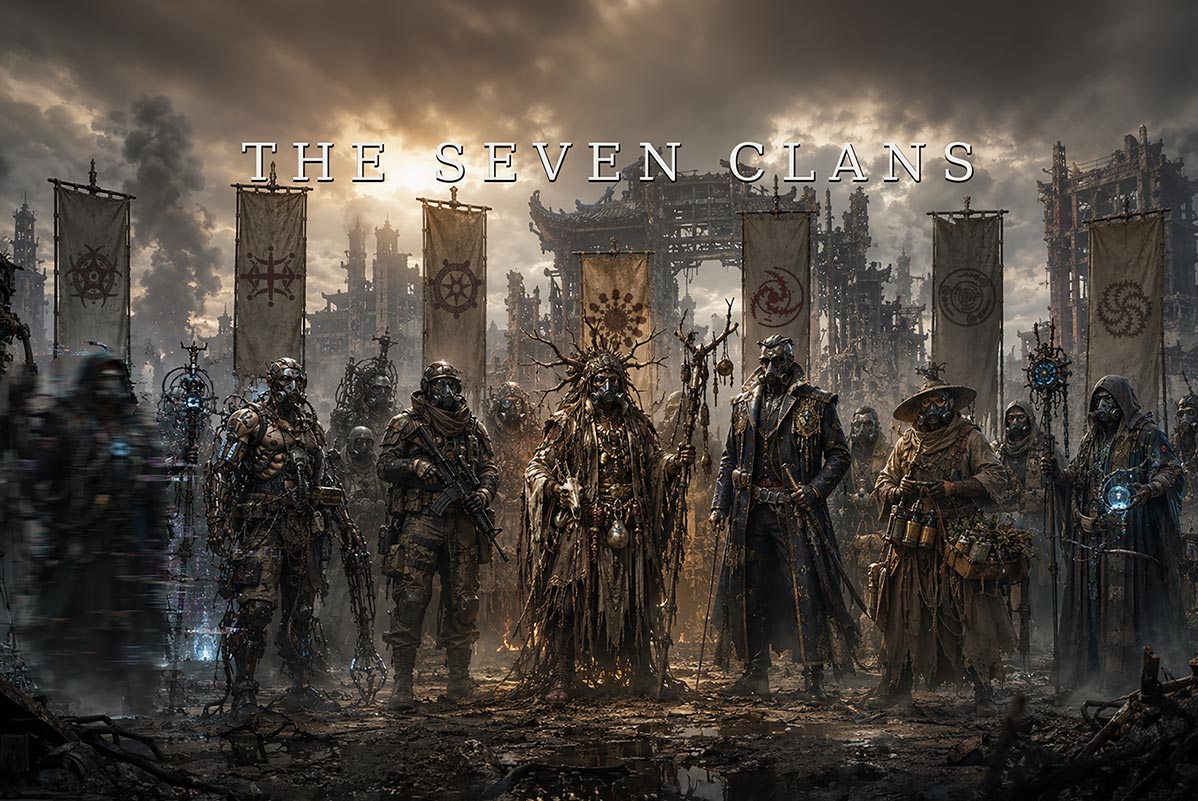
As Earth-bound seers, the Visari never accepted the religion brought from the stars. Because that religion was inseparable from alien science, the Visari became an isolated faction of humanity — rejecting most of the technological miracles of the Golden Age and preserving a life bound to nature, sacred cycles and the Old Ways. While the world dreamed of the stars, the Visari kept listening to Earth. They were the first to understand that the planet was dying because humanity had broken its bond with the living world. After the Apocalypse, their shamans and spiritual leaders guided the other Clans in learning how to survive beneath toxic skies. Representative in the Scÿthe: DA’AT
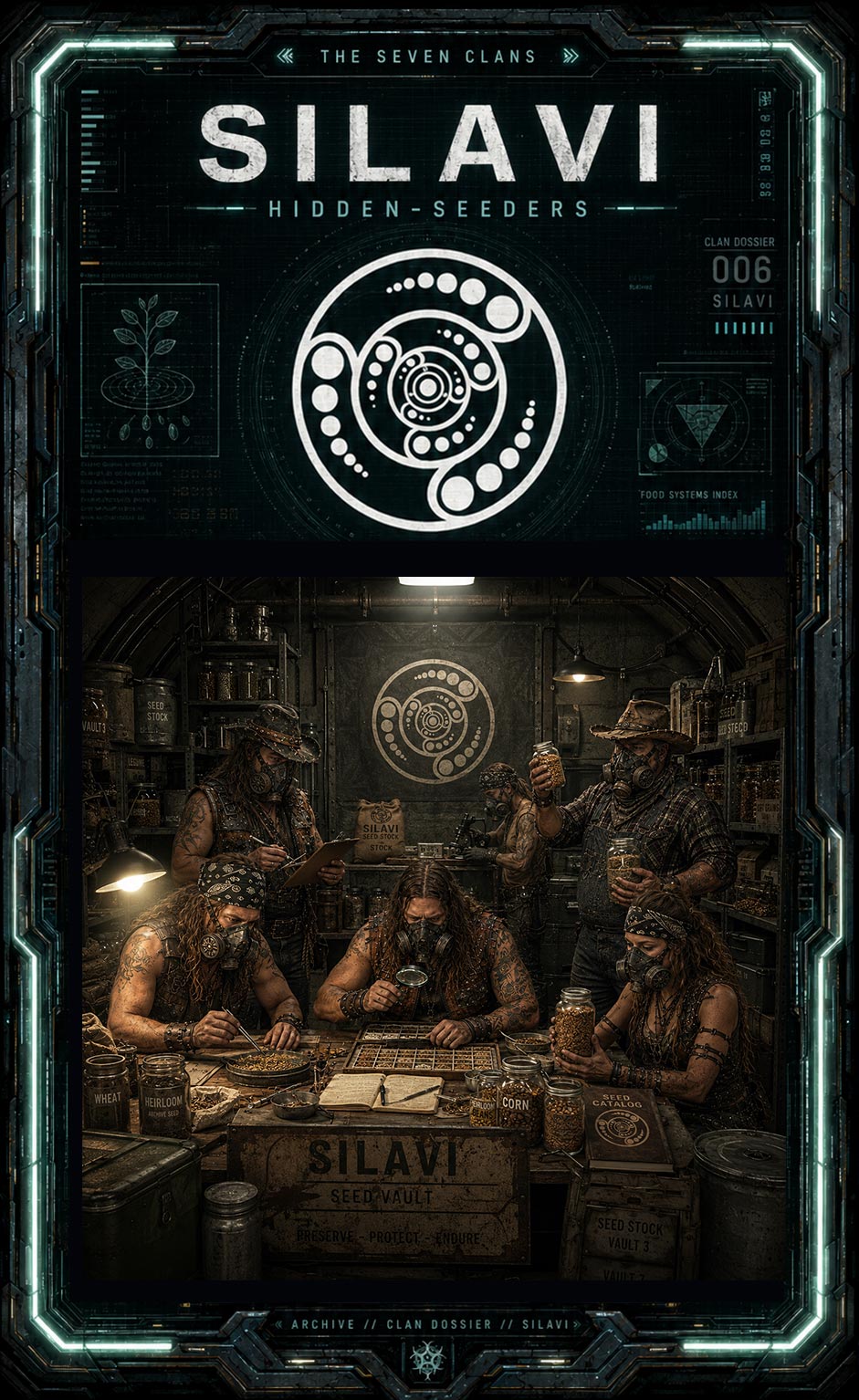
SILAVI

Aliases:

Haybacks, Hidden-Seeders, Silo-Rats, Bunker Farmers

Origin:

The Silavi were the farmers, seed-keepers and food-system workers of the future. Their name comes from the Silos — the underground food bunkers where seeds, grains and farming knowledge survived the War.

Summary:

Before the War, they controlled vast agricultural networks and global food distribution systems. But as the world collapsed, farms became strategic targets. Fields were burned, poisoned or destroyed to starve enemies into submission. To survive radiation, toxic air and war devastation, the Silavi moved their production underground. Seeds, grains, animals, tools and farming knowledge were carried into bunkers and caves, where the last food systems of humanity were rebuilt beneath the surface. Rough, practical and deeply generous, the Silavi became the providers of the post-apocalyptic world. They may look like survivors from the margins of civilization, but without them, no civilization would remain. Representative in the Scÿthe: HESED

ASHARI

Aliases:

Xenophilosophers, Technomancers, Conspiracy Theorists, Know-It-Alls

Origin:

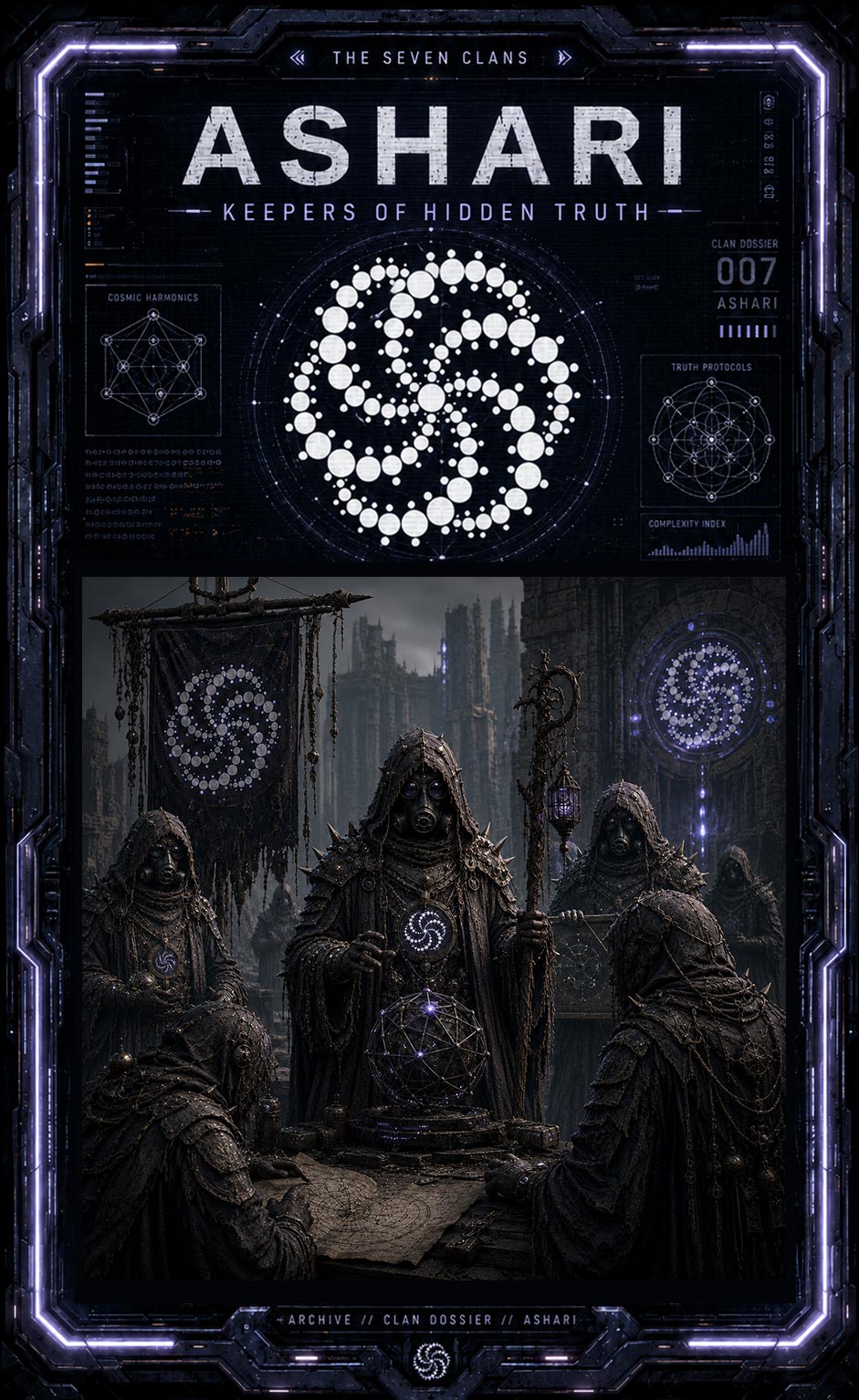
Their name comes from the concept of Asha — an ancient idea of truth, rightness and cosmic order.

Summary:

The Ashari studied the aliens and the religion they brought from the stars more deeply than any other human faction. They embraced its philosophical and spiritual power: the elevation of consciousness, the union between technology and transcendence, and the new mathematics, physics and cosmology that reshaped humanity’s understanding of the universe. But they never trusted those who brought it. Because they understood alien thought so deeply, the Ashari were also the first to perceive its flaws. They saw patterns, contradictions and hidden intentions where others saw salvation. Long before the Collapse, they suspected that the War had not begun by human hands alone. The rest of humanity dismissed them as conspiracy theorists. They were not. Representative in the Scÿthe: HOKHMAH

ISTENI

Aliases:

Aristocrats, The Elevated Ones, Moon Folk, Political Scum, The Divine Ones

Origins:

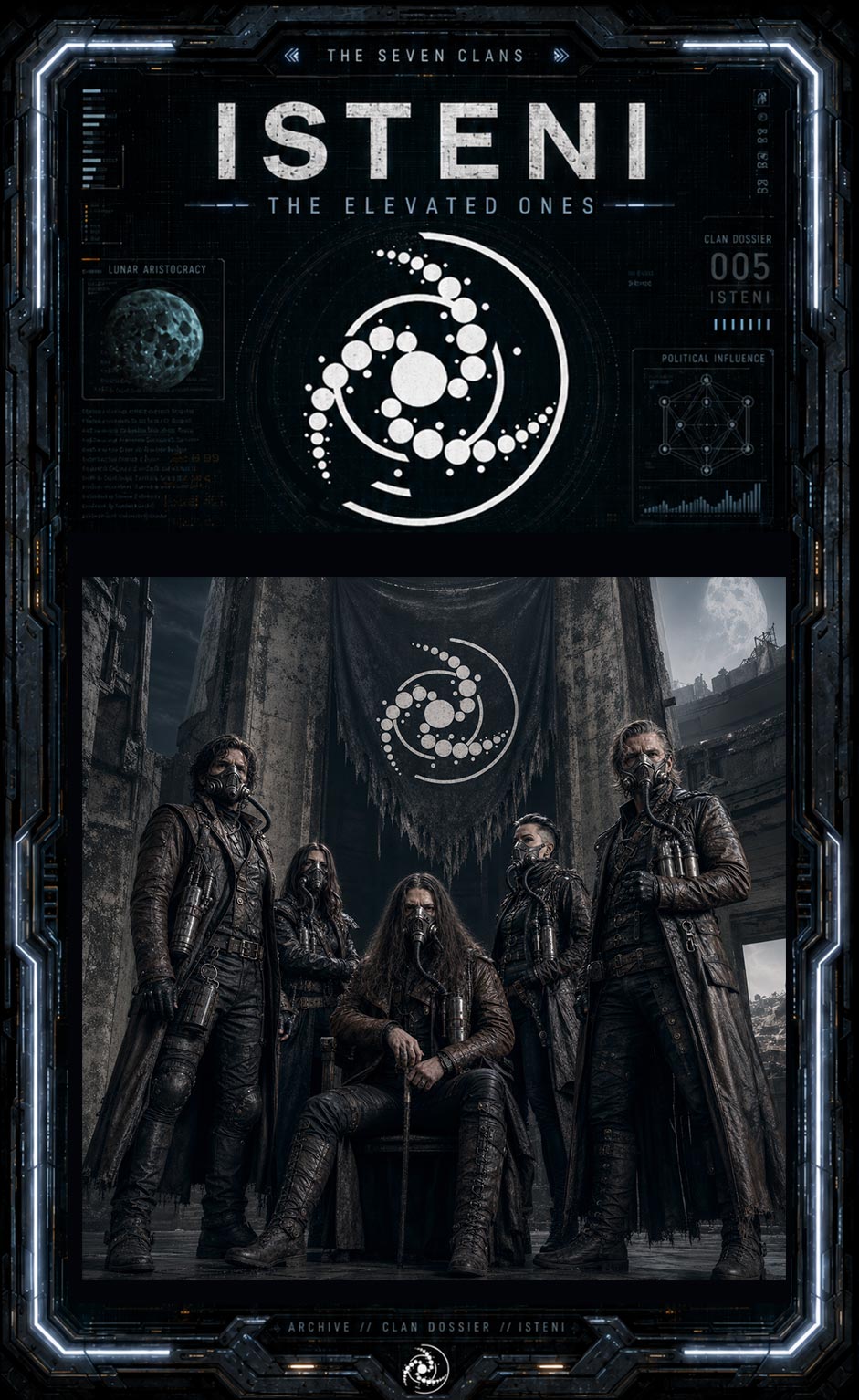
Their name comes from an ancient word meaning ‘divine’. What was once sold by the media as a noble title became a mockery during the War.

Summary:

The Isteni came from privilege. They were politicians, diplomats, aristocrats and members of the ruling elite who had fully adapted to the Golden Age system. During the War, many of them became isolated on the Moon, where they built and governed lunar society far from the ruins of Earth. When the final departure was announced, the Isteni faced a brutal logistical race: repair their transport systems, gather fuel and return to Earth before the gates closed. They succeeded in returning. But they arrived too late. Betrayed, stranded and unable to return to the Moon, the Isteni were forced to survive beside the very people their class had once governed from above. Their loyalty to the old system died at the sealed gates. Now, they use diplomacy, administration and political strategy to help rebuild order among the survivors. Representative in the Scÿthe: NETZAH

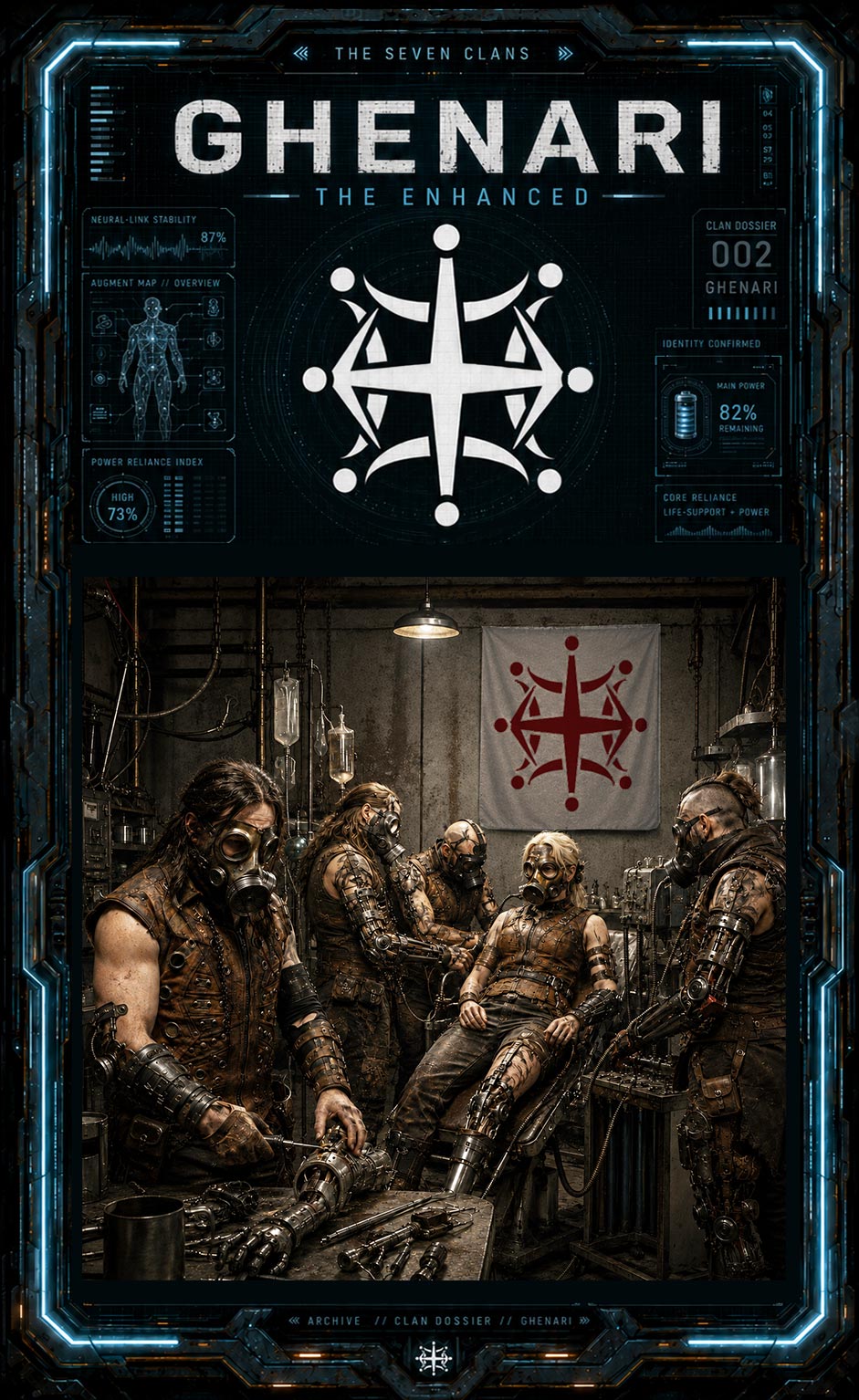
GHENARI

Aliases:

The Enhanced, Cyborgs, Battery-Hearts, Scrap-Bodies, Life-Supported

Origin:

Their name began as a media label for those saved by GhenTech.

Summary:

Cybernetic enhancements were common during the Golden Age, but after the War, only a few could still maintain them. The Ghenari were not enhanced for luxury. Most of them needed cybernetics to survive: bodies damaged beyond biological repair, limbs replaced by machines, organs supported by artificial systems, lives sustained by energy and maintenance. When the final departure came, cybernetically enhanced humans were excluded. Their artificial parts were treated as a threat, even when those parts were the only reason they were still alive. Abandoned and dependent on scarce energy sources to keep their bodies functioning, the Ghenari joined the other Clans as their last hope. In the Sanctuary, they became healers, engineers, patients and living proof that humanity could survive even after the body had been broken. Representative in the Scÿthe: YESOD

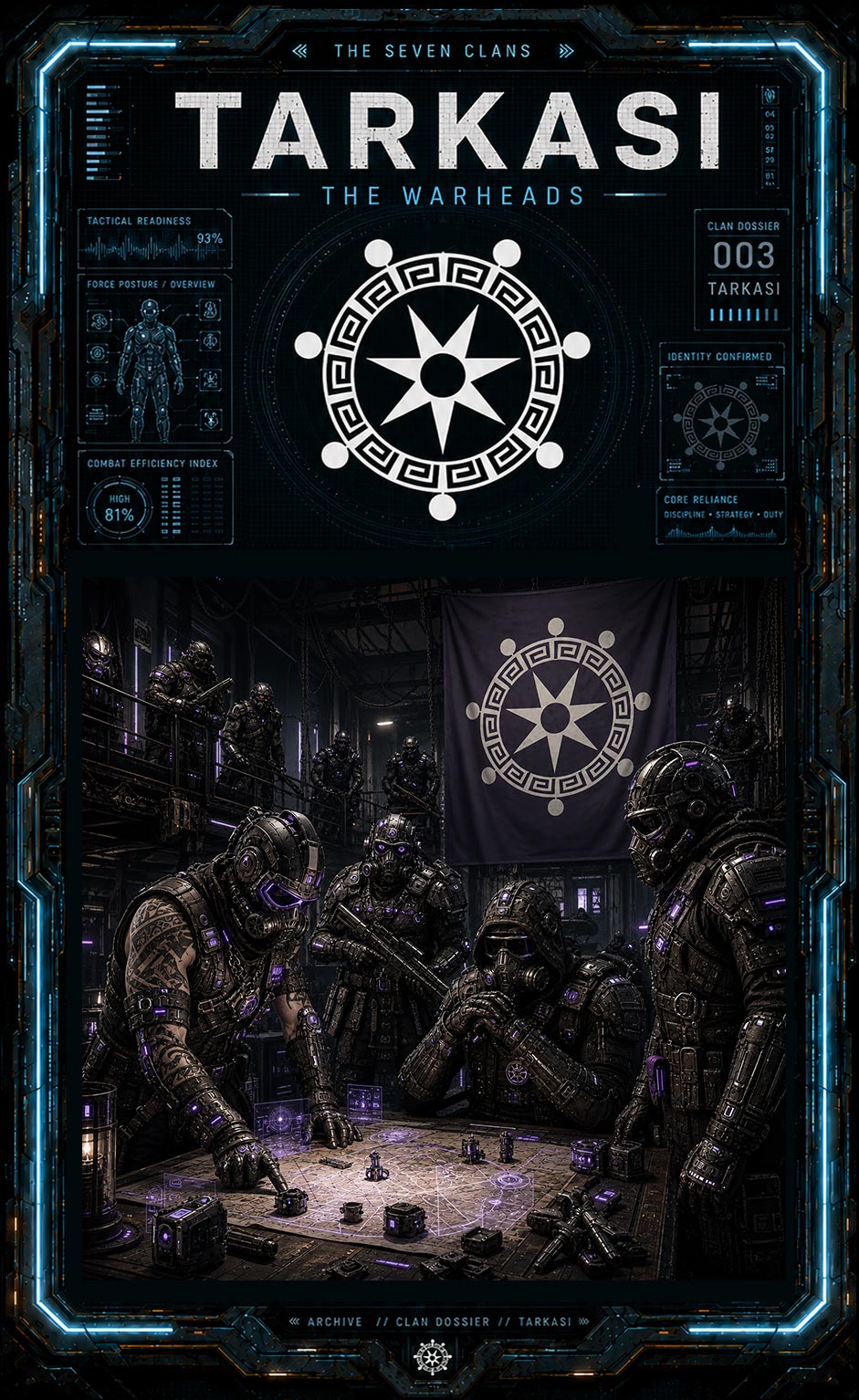
TARKASI

Aliases:

Warheads, Iron Dogs, Trigger-Men, Butchers

Origin:

Their name echoes ancient warrior titles once given to commanders, battle-born nobles and military leaders.

Summary:

The Tarkasi were born from the soldiers left behind.After the War, every person with a military record was forbidden from joining the Exodus. Soldiers from enemy nations, rival blocs and opposing armies were abandoned together on the same dying Earth. To survive, they had to do what humanity had failed to do before the Apocalypse: overcome the divisions that created the War. The Tarkasi became a military Clan built on discipline, strategy, protection and sacrifice. Their role in the Scÿthe is essential: to defend the Sanctuary, maintain order during dangerous operations, and keep the time-travel missions from collapsing into chaos. Representative in the Scÿthe: MALKHUTH

DREEX


TOP